

Karwa Chauth AI Image Prompts: Create Stunning Festive Portraits
Copy-paste Karwa Chauth AI prompts for realistic portraits, couple photos, mehndi close-ups and festive posters. Keep your face exactly the same.
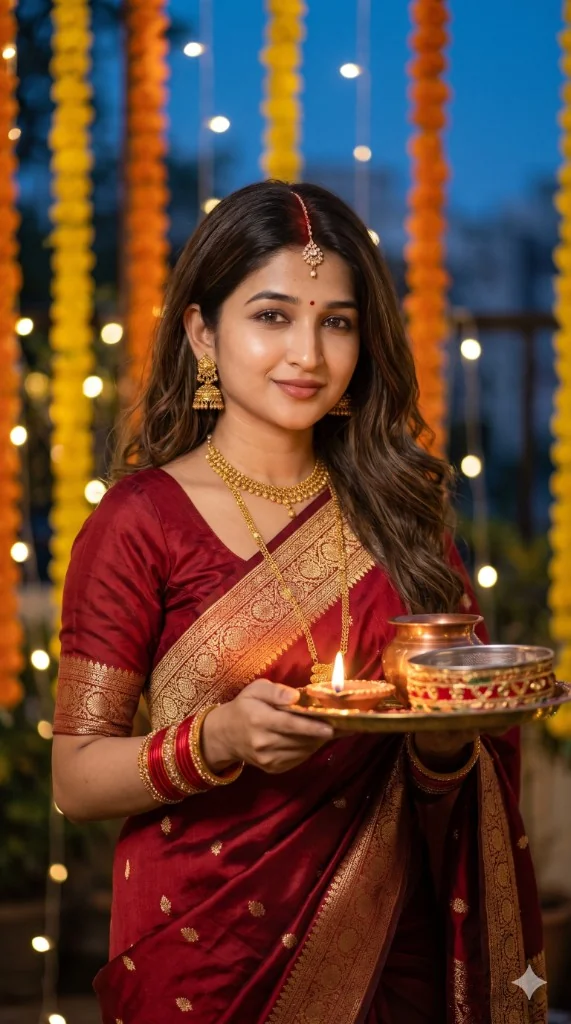
Karwa Chauth is one of the most photographed festivals in India: the red saree, the glowing diya, mehndi-covered hands, and the moment she looks at the moon through the sieve. In 2026 it falls around 29 October — confirm the exact date and moonrise time for your city in a local panchang. Many people now use AI to create festive portraits and posters for WhatsApp, Instagram, and gifts.
This guide covers what makes a good Karwa Chauth prompt, how to keep your face the same, and 20 copy-paste prompts you can run in Gemini, ChatGPT, or Midjourney. Start with the Karwa Chauth collection (6 ready looks with example images), or browse the Festival AI photo prompts hub and Same Face AI portraits.
1. Lock your identity first
If you upload a reference photo, start your prompt with an identity instruction such as: “Keep the person exactly as shown in the reference image with 100% identical facial features, bone structure and skin tone.” Putting it first stops the AI from beautifying or changing your face.
2. Use structured prompts
Instead of one long sentence, split your prompt into fields: subject, outfit, props, setting, lighting, camera, and style. This gives you more consistent results and makes it easy to change one detail without rewriting everything.
3. Add authentic Karwa Chauth details
The festival has specific visual elements. The more of them you name, the more authentic the image looks:
- Red or maroon saree or lehenga with gold zari
- Mehndi, red bangles, bindi, and sindoor
- Decorated thali with diya, karwa pot, and sieve
- Moon in the night sky
- Marigold garlands, rangoli, and fairy lights
4. Lighting is everything
Karwa Chauth is an evening festival, so the best images mix warm diya light with cool blue moonlight. Phrases like “warm diya glow on face, soft moonlight rim light” give a cinematic look.
5. Popular image ideas
- Classic red portrait: bridal-style look with a thali
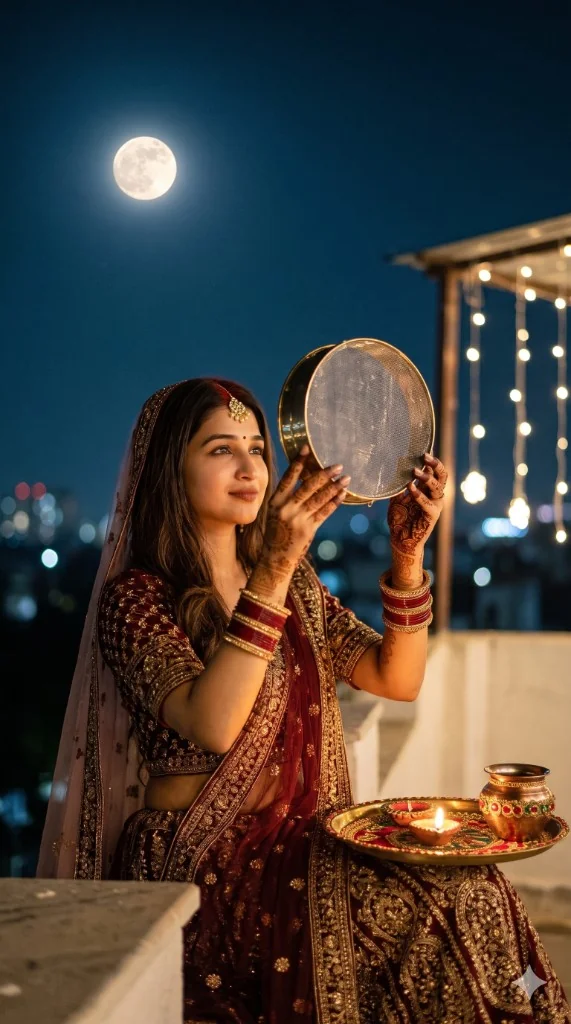
- Moon and sieve: terrace shot — the most iconic Karwa Chauth image
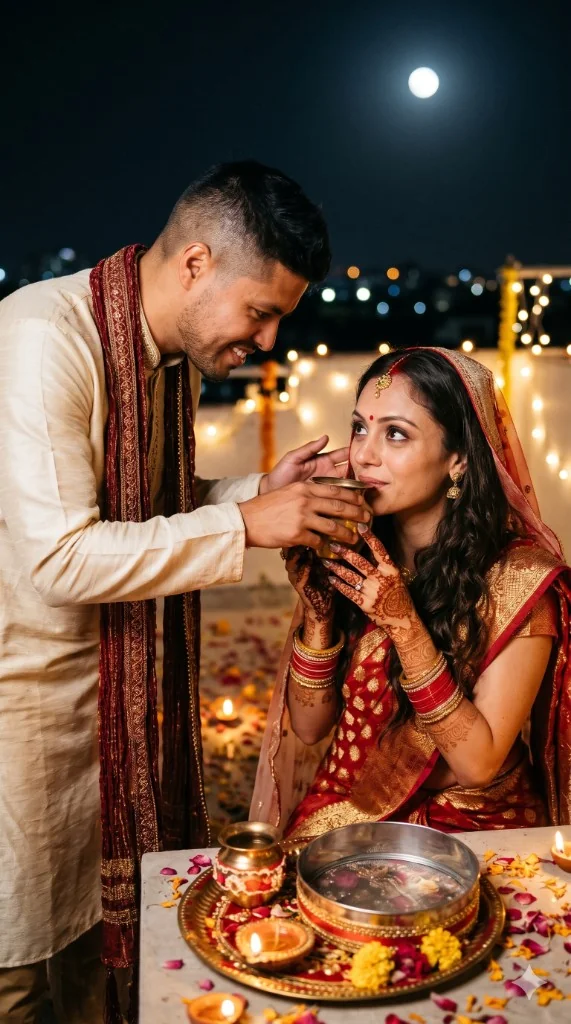
- Couple photo: the husband offering water to break the fast
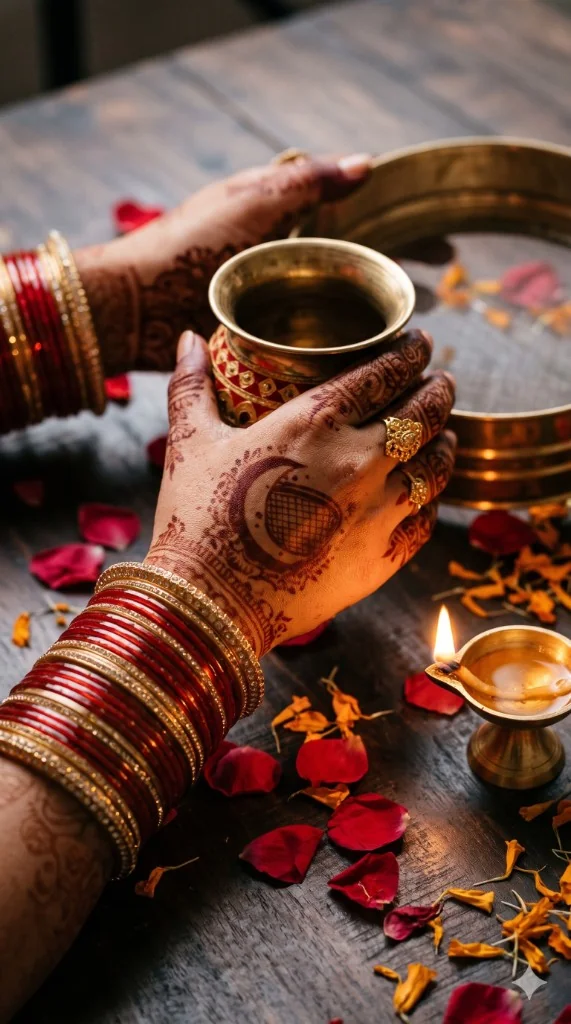
- Mehndi close-up: hands with the karwa and diya
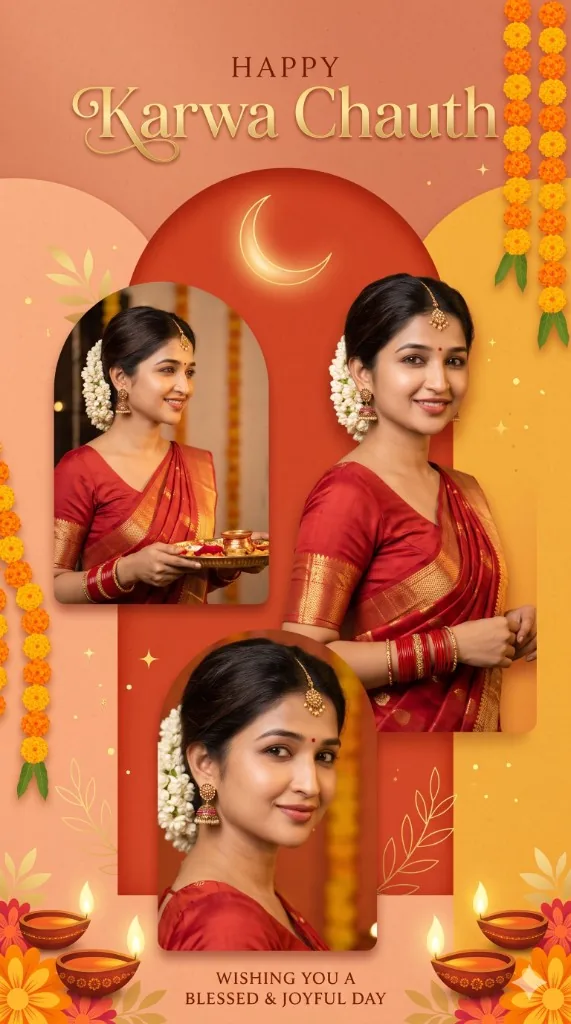
- Festive poster: collage with gold text and floral graphics
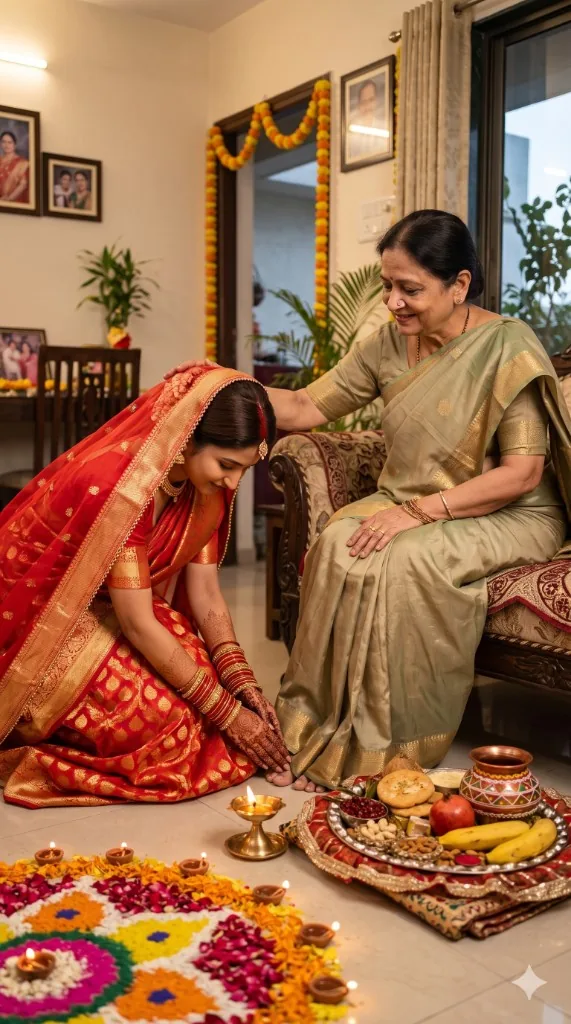
- Family moment: touching the elders’ feet and the sargi thali
From the Karwa Chauth collection
These six looks are live on the collection page with copy-paste prompts and example outputs.
6. Tips to avoid common AI mistakes
- Add a negative line: no extra fingers, no distorted hands, no face change, no watermark.
- Keep poster text short (2–3 words), because AI often misspells long text.
- Use a 9:16 aspect ratio for Instagram Reels, Stories, and WhatsApp Status.
- For couple images, upload clear reference photos of both people and say “no face swap between subjects”.
- If hands or face break, use the repair tips in How to fix AI festival photos.
20 Karwa Chauth AI prompts to copy
Paste any of these after your identity-lock line. Swap saree colour, city terrace, or jewellery as needed. Prefer Gemini or ChatGPT with your photo attached for face lock. For ready-made versions with example images, open the collection.
Classic portraits (1–5)
1. Classic red saree thali portrait — Keep the person exactly as shown in the reference image. Adult Indian woman in a deep red silk saree with gold zari border, matching blouse, sindoor, bindi, red bangles, and mehndi. She holds a decorated Karwa Chauth thali with diya, karwa pot, sweets, and a silver sieve. Soft warm diya glow on her face, cool night terrace behind, marigold and fairy lights. Medium eye-level portrait, 4:5, photorealistic skin and fabric, no watermark. Ready version: red saree thali portrait.
2. Maroon lehenga balcony look — Same identity lock. Woman in a maroon lehenga with gold embroidery and sheer dupatta, standing on a quiet balcony at dusk holding a lit diya. Warm key light from the diya, soft city bokeh, elegant bridal makeup, realistic mehndi on hands. 4:5, 85mm look, no plastic skin.
3. Gold-border black saree night portrait — Same identity. Black saree with gold border and floral motifs, gold choker and jhumkas, long wavy hair over one shoulder. Night outdoors with hanging fairy lights, warm golden bokeh, serene smile, tiny bindi. Medium eye-level, 4:5, 8K photoreal.
4. Bridal-style Karwa Chauth glam — Same identity. Red Banarasi saree, heavy gold jewellery, maang tikka, fresh jasmine in a low bun. She sits near a rangoli with a full thali. Warm tungsten + diya light, soft moonlight fill. Editorial 85mm portrait, 4:5.
5. Soft pastel festive saree — Same identity. Soft pink or peach saree with subtle zari, light jewellery, gentle smile. Indoor festive décor with marigolds and fairy lights. Soft window + lamp mix, natural skin texture, 4:5.
Moon and sieve (6–9)
6. Iconic moon through sieve — Same identity. Woman on a terrace at night lifting a silver sieve toward a clear full moon, red saree pallu over one shoulder, thali nearby. Cool moonlight rim light + warm diya on face. Cinematic 9:16 vertical, sharp face, realistic hands. Ready version: moon and sieve terrace.
7. Sieve close-up with moon bokeh — Same identity. Close portrait looking through the sieve toward the moon; sieve frame soft in foreground, eyes sharp. Red bindi, sindoor, gold earrings. Night sky, soft bokeh. 4:5.
8. Terrace side profile moonrise — Same identity. Elegant side profile holding the sieve, moon rising over rooftops, maroon saree, wind in pallu. Cool blue night grade with warm face light. 9:16.
9. Diya and moon double light — Same identity. Standing on terrace with lit diya in one hand and sieve in the other, moon above. Warm diya glow on skin, soft moonlight rim. Full-length three-quarter, 4:5, realistic fabric folds.
Couple moments (10–13)
10. Breaking the fast — Keep both faces 100% identical to their reference photos; no face swap. Husband offers a glass of water; wife in red saree smiles after the moon sighting. Warm indoor festive light, thali on table. Couple medium shot, 4:5. Ready version: couple breaking fast.
11. First look after the moon — Same dual identity lock. Couple on terrace, wife still holding sieve, husband beside her in a simple kurta. Soft moonlight and fairy lights. Natural expressions, realistic hands. 9:16.
12. Seated couple with thali — Same dual identity lock. Both seated on a sofa or floor with the decorated thali between them, marigold décor. Warm lamp light, intimate editorial feel. 4:5.
13. Blessing moment — Same dual identity lock. Wife touches husband’s feet after the fast; respectful, soft emotion. Indoor festive setting. Natural skin, no dramatised CGI. 4:5.
Mehndi and details (14–16)
14. Mehndi hands with karwa — Extreme close-up of mehndi-covered hands holding a brass karwa pot and lit diya. Red bangles, gold rings, soft warm light. Photoreal skin and henna detail, 1:1 or 4:5. No face required. Ready version: mehndi hands close-up.
15. Thali flat lay — Top-down festive flat lay: decorated thali, diya, karwa, sieve, sweets, sindoor box, marigold petals on a rich fabric. Soft overhead light, 1:1 product-style photo.
16. Mehndi arm portrait — Same identity. Woman’s face soft in background, focus on forearm mehndi and red bangles as she holds the thali edge. Shallow depth of field, warm diya key. 4:5.
Posters and family (17–20)
17. Minimal festive poster collage — Same identity. Clean graphic collage of two or three portraits of the woman in red festive wear on a cream and gold background with marigold accents. Short text only: “Karwa Chauth” in elegant gold lettering. 9:16, no misspellings, no watermark. Ready version: floral collage poster.
18. Sargi morning portrait — Same identity. Soft morning light, woman receiving sargi from mother-in-law or mother, traditional outfits, warm home interior. Gentle smiles, realistic hands. 4:5. Ready version: festive family portrait.
19. Family blessing — Keep all faces identical to references. Woman touches elders’ feet; family in coordinated festive wear. Courtyard or living room with rangoli and marigolds. Every face visible, 4:5.
20. WhatsApp status vertical — Same identity. Simple red-saree night portrait with moon and soft fairy lights, space at the top for a short caption later (do not generate text). Strict 9:16, sharp face, natural skin.
7. Where to use your creations
WhatsApp status, Instagram posts and stories, festive greeting cards, gifts for your husband or wife, and profile pictures. Use 9:16 for Stories and Reels, 4:5 for feed posts, and 1:1 for profile pictures.
Final thoughts
With a good prompt structure and the right festive details, anyone can create professional-looking Karwa Chauth portraits in minutes. Copy the prompts above, swap in your own outfit and setting, or start from the Karwa Chauth collection and make this year’s photos memorable.
- Karwa Chauth AI Photo PromptsAll 6 identity-locked looks with example images.
- Red saree thali portrait9:16 courtyard portrait with diya, karwa pot, and sieve.
- Moon and sieve terraceIconic terrace moon-sighting look.
- Couple breaking the fastDual identity lock for husband and wife.
- Mehndi hands close-upMacro bridal mehndi with karwa and diya.
- Floral collage posterFestive graphic poster with gold script.
- Festive family portraitSargi blessing with mother-in-law.
- Festival AI photo promptsMore Indian festival looks in one hub.
- Same Face AI portraitsIdentity-locked portraits when face match matters most.
- How to fix AI festival photosRepair hands, face, and couple merges after the first generate.
FAQ
Which AI tools work with these Karwa Chauth prompts?
Any image generator that supports reference images, such as Gemini, Midjourney, or ChatGPT image generation. Results vary by tool.
How do I keep my face the same?
Upload a clear, front-facing reference photo and put the identity-lock line at the start of the prompt.
What size should I use?
9:16 for Stories and Reels, 4:5 for feed posts, and 1:1 for profile pictures.
When is Karwa Chauth in 2026?
Around 29 October 2026. Confirm the exact date and moonrise time for your city in a local panchang.